Quote of the Day: William Shatner on Awe and Transformation
William Shatner, the legendary actor who played Captain Kirk and later became the oldest person to fly to space, reflects on the overwhelming power of seeing Earth from above — and why we should never let that feeling fade.
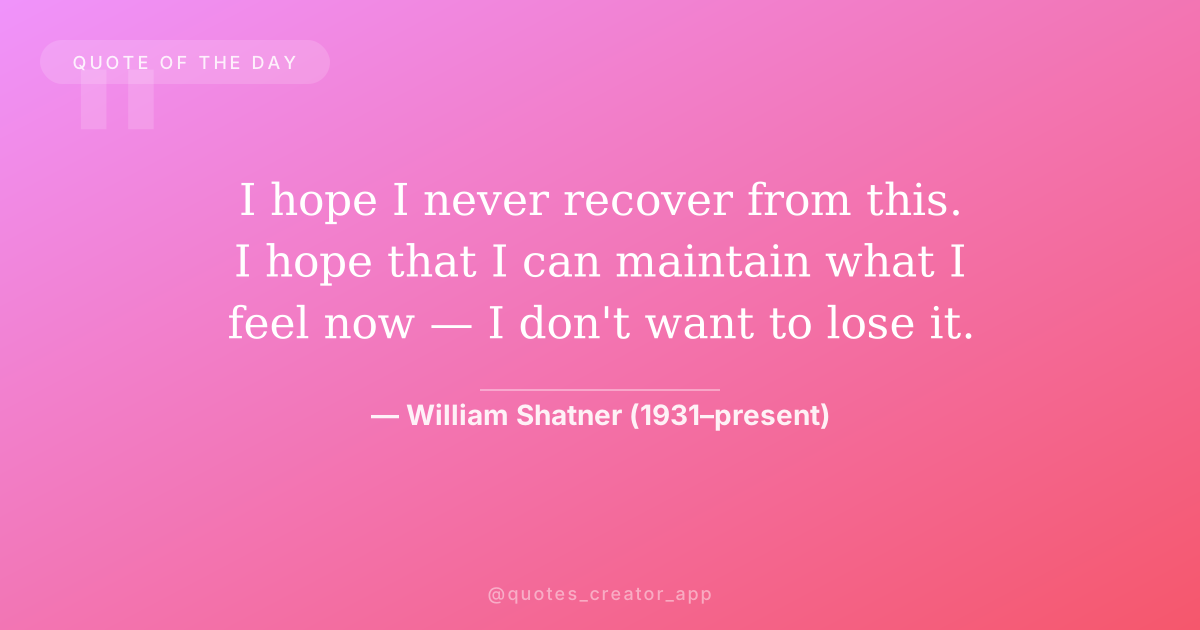
“I hope I never recover from this. I hope that I can maintain what I feel now — I don’t want to lose it.”
What this quote means
On the surface, William Shatner is describing the raw emotional aftermath of a singular experience. At age 90, he had just become the oldest human to travel to space, aboard Blue Origin’s New Shepard rocket. The flight lasted just over ten minutes, but it reshaped him. When he stepped out of the capsule, he did not deliver a prepared speech or a witty one-liner. He stood there, visibly overwhelmed, and said the most honest thing he could: he did not want the feeling to end.
The deeper truth here is about the fragility of awe. Most transformative experiences — a breathtaking view, a moment of profound connection, a brush with something vast and unknowable — fade within days or weeks. The brain normalises the extraordinary. Shatner understood this instinctively. His plea to “never recover” is not about staying in a rocket. It is about refusing to let the ordinary world sand down the edges of a moment that changed him. He is naming the quiet tragedy of the human condition: that we forget wonder.
Shatner’s reaction is especially striking given who he is. He spent decades playing a starship captain on television, a man who hopped from galaxy to galaxy as though it were routine. But when he actually looked down at the Earth from the edge of space, the fiction fell away. He saw the thin blue line of the atmosphere, the fragility of the planet, and the sudden, shocking reality of mortality. “It has to do with the enormity,” he said later, “at the quickness and the suddenness of life and death.” The man who had pretended to explore the cosmos was humbled by the real thing.
In everyday life, this quote is a challenge. When was the last time you felt something so deeply that you wanted to preserve it forever? Shatner asks us to take those moments seriously — to write them down, talk about them, sit with them before they dissolve into memory. The goal is not to live in a permanent state of euphoria. It is to recognise awe when it arrives and to give it the dignity of attention before the world rushes in to fill the space.
About William Shatner
William Shatner was born on March 22, 1931, in Montreal, Quebec. He studied commerce at McGill University while performing in radio dramas and theatre, then moved to New York to pursue acting. He trained at the Canadian National Repertory Theatre and appeared in early television dramas before his breakout role as Captain James T. Kirk on Star Trek in 1966. The show lasted only three seasons but became a global phenomenon in syndication, turning Shatner into one of the most recognisable faces in popular culture.
He went on to star in the Star Trek film franchise, the police drama T. J. Hooker, and the TekWar television series based on his own novels. He won Emmy and Golden Globe awards for his role as attorney Denny Crane on Boston Legal, demonstrating a comedic and dramatic range that surprised even his critics. He has written multiple books, including several science fiction novels and memoirs such as Up Till Now and Leonard: My Fifty-Year Friendship with a Remarkable Man, a deeply personal tribute to his Star Trek co-star Leonard Nimoy.
In 2021, at age 90, Shatner flew aboard Blue Origin’s NS-18 mission, becoming the oldest person to journey to space. The experience marked a profound spiritual turn in his public life; he spoke about it with an openness that surprised many. He has also been a passionate environmental advocate, using his platform to call attention to climate change and the fragility of the planet. His career spans seven decades across acting, writing, directing, and music, making him one of the most enduring and unexpectedly philosophical figures in modern entertainment.
Create your own quote graphic with this quote
This is the kind of quote that works beautifully as a visual piece — short, emotional, and framed by a powerful story. A clean gradient background, a serif typeface, and plenty of negative space can help the words land the way they did when Shatner spoke them. Use our free online quote maker to turn this quote into a shareable image in seconds — no signup required. For more advanced features including video quotes and hundreds of templates, check out the Quotes Creator Android app.
Editor’s note
William Shatner’s trip to space happened in 2021, but his words feel especially urgent in the summer of 2026, as the 2026 FIFA World Cup and a packed news cycle crowd our attention. In a world that constantly demands the next thing, Shatner reminds us to pause and let something matter. If you felt anything deeply today — pride, grief, joy, surprise — resist the urge to move past it quickly. Sit with it for sixty seconds before you scroll on. That is what Shatner meant by never recovering.
— ThinkPeak Studio Editorial Team
Tips for designing this quote
- ✓ Use a serif font (Georgia, Playfair Display) to match the reflective, emotional weight of the quote
- ✓ Keep the text to three or four lines — shorter blocks read better on mobile screens
- ✓ Pair the quote with a warm fuchsia-to-coral gradient for the emotional intensity of the moment
- ✓ Add the author name in a smaller, lighter weight below the quote
- ✓ Export in square format for Instagram feed and portrait for Stories or Pinterest
Create your own quote graphic with this quote
Turn this line into a shareable graphic in seconds — free, no signup needed. For video quotes and 100+ templates, try the Android app.
Advertisement
Enjoyed this article? Get more like it in your inbox.